The Occupational Therapy Practitioner's Guide to Fascia-Informed Practice
An Integrative Approach to Health and Wellness

Problems Solved
- Clarifies fascia's role beyond pain management across occupational therapy
- Defines fascia and connects evolving definitions to health and function
- Addresses how modern behaviors affect the fascial system and well-being
- Guides integration of fascia science into assessment and intervention
- Provides occupation-based strategies for both individual and group practice
- Equips practitioners with sustainable, evidence-based fascia-informed approaches
The Reviews Are In:

Review review review review review review
Reviewer
Occupation
Review review review review review review
Reviewer
Occupation
About the Author
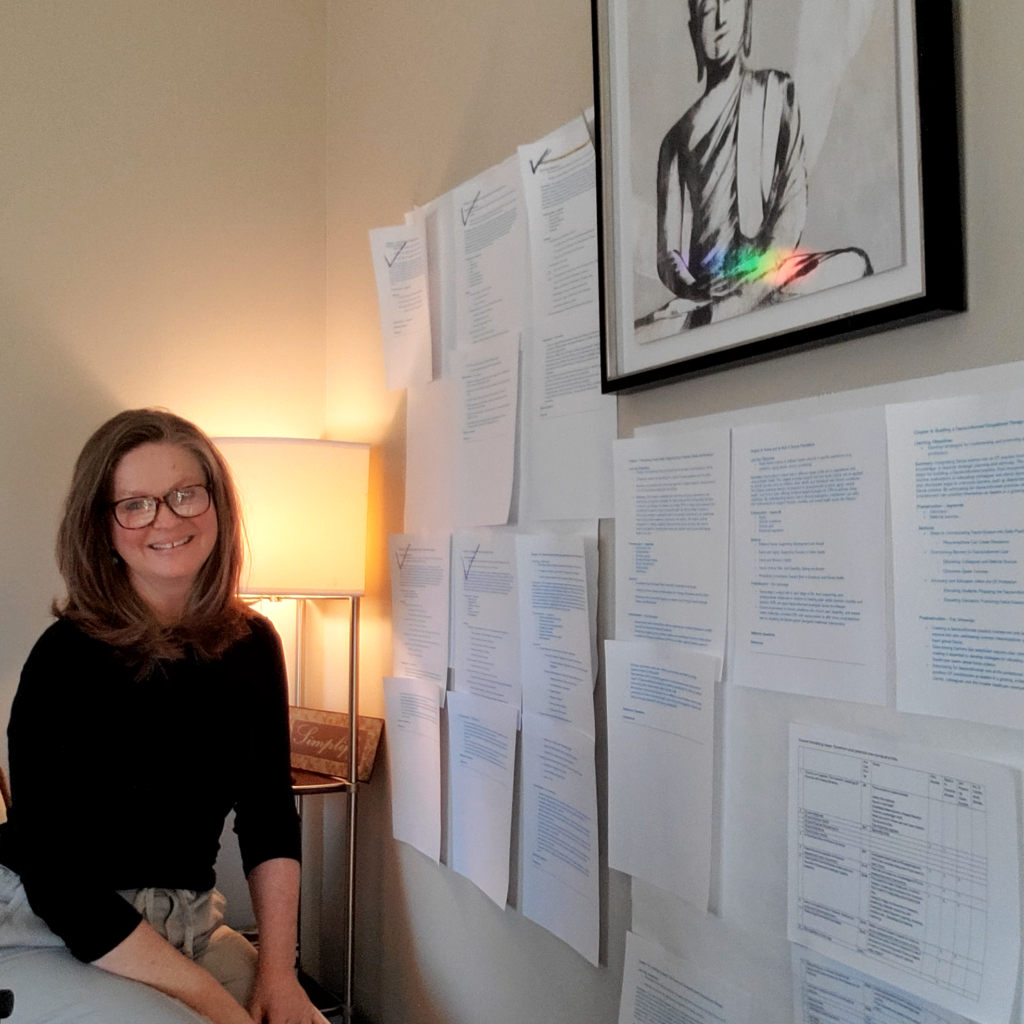
Amy Mayer OTD, OTR/L, RYT has dedicated her life’s work to a fascia-informed approach to occupational therapy care that helps patients reduce, manage, and eliminate pain. After discovering the transformative impact of fascia-targeting treatment, she began teaching students and practitioners to see the body as a connected, adaptive system — shaped by movement, emotion, and experience — so they too can experience the joy of helping patients achieve their goals.
Read an Exclusive Excerpt
Sign Up For Our Newsletter
Continue your learning beyond the classroom. Sign up for our newsletter to receive fascia-informed insights, continuing education updates, and practical strategies you can apply in your practice.
Frequently Asked Questions
The Occupational Therapy Practitioner’s Guide to Fascia-Informed Practice is written specifically for occupational therapy practitioners (OTPs), including occupational therapists (OTs), occupational therapy assistants (OTAs), and OT students. It provides a practical, clinically relevant approach to understanding fascia and applying fascia-informed practice within occupational therapy.
The book is also suitable for physiotherapists, massage therapists, and other health and wellness professionals who want to better understand fascia, movement, pain, and rehabilitation, and apply these concepts in their own practice.
Occupational therapists can use this fascia textbook to better understand how fascia influences functional movement, posture, pain, and daily activities. The book supports OTs in integrating fascia-informed approaches into treatment sessions, helping improve client outcomes in areas such as mobility, coordination, and overall function. It provides a foundation for applying fascia concepts directly within occupational therapy practice.
This textbook combines both theory and practical application. It explains fascia in a clear, easy-to-understand way while also connecting the information to real-life clinical practice. Health professionals will be able to take what they learn and begin applying fascia-informed thinking and techniques in their work with clients.
No prior knowledge of fascia is required. The Fascia Informed textbook is written to be accessible for beginners while still offering valuable insights for experienced health professionals. It builds understanding step by step, making it a useful resource whether you are new to fascia or looking to deepen your existing knowledge.
This book is designed specifically with health professionals in mind, especially those working in occupational therapy and rehabilitation. It focuses on making fascia easy to understand and clinically relevant, rather than overly complex or purely academic. The goal is to help you confidently apply fascia-informed concepts in your everyday practice and improve client care.
Yes. By understanding how fascia affects movement, pain, and the nervous system, health professionals can take a more holistic and effective approach to treatment. This often leads to improved outcomes in areas such as mobility, comfort, and functional independence. The book supports a deeper clinical reasoning process, which can enhance the quality of care you provide.
Yes. The Fascia Informed textbook is part of a broader approach to fascia-informed education. For those who want to go further, we offer in-person and online courses that build on the concepts in the book and provide hands-on learning and practical application. Many health professionals use the textbook as a foundation before continuing into more advanced fascia training.
Other Book Resources I Love
If you want to learn the science on your own, these are resources I have gone to over and over.
Please note that the links are to Amazon. I am an associate and get a small commission if you purchase through my link.